Moydrum Castle
Moydrum Castle (Irish: Caisleán Maigh Droma meaning "plain of the ridge") is a ruined castle situated in the townland of Moydrum in County Westmeath in Ireland, just to the east of Athlone. The property is privately owned.
County Westmeath (; Irish: Contae na hIarmhí or simply An Iarmhí) is a county in Ireland. It is in the province of Leinster and is part of the Eastern and Midland Region. It formed part of the historic Kingdom of Meath, which was named Mide because the kingdom was located in the geographical centre of Ireland (the word Mide meaning 'middle'). Westmeath County Council is the administrative body for the county, and the county town is Mullingar. At the 2022 census, the population of the county was 95,840.
Intro from Wikipedia (CC BY-SA 4.0)
Moydrum Castle (Irish: Caisleán Maigh Droma meaning "plain of the ridge") is a ruined castle situated in the townland of Moydrum in County Westmeath in Ireland, just to the east of Athlone. The property is privately owned.
Knockdrin (Irish: Cnoc Droinne) is a townland and electoral division that is 5.6 kilometers northeast of Mullingar, in County Westmeath, Ireland. It is the home of the Westmeath Hunt, and its most notable building is Knockdrin Castle. The R394 regional road, the main Mullingar to Castlepollard route, runs through the area.
Mullaghmeen (Irish: Mullach Mín, meaning 'smooth summit'), at 258 metres (846 ft), is the county top for Westmeath in Ireland, and is the lowest county top in Ireland. Mullaghmeen is located in the Mullaghmeen Forest, known for having the largest planted beech forest in Europe.
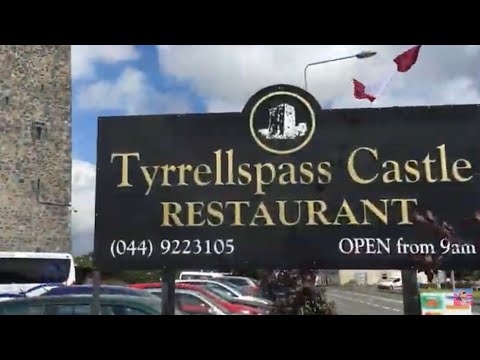
Tyrrellspass Castle is a medieval castle in Tyrrellspass, County Westmeath, Ireland. Dating back to circa 1411, it is the only remaining castle of the Tyrrells who came to Ireland around the time of the Norman Invasion.
Ballinlough Castle is a 17th-century country house situated near the rural town of Clonmellon in County Westmeath, Ireland on a hill overlooking two of the Westmeath lakes. It is the home of Nicholas and Alice Nugent.
Tudenham Park House (Irish: Teach Tudenham), originally called Rochfort House, is an 18th-century Palladian limestone country house located in Tudenham Park on the Rochfort Demesne near Belvedere House and Gardens beside Lough Ennell, County Westmeath, Ireland. The house is known for being involved in an ordeal with Robert Rochfort's brother, George, which resulted in Robert constructing The Jealous Wall so he would not have to look at his brother's grander house.
Portlick Castle is a late medieval tower house castle near the village of Glasson, County Westmeath, Ireland. It is located approximately 6 miles from Athlone on the shores of Lough Ree. It comprises a square late medieval 4-storey stone tower with an attached 2-storey Georgian wing and Victorian tower.
Rattin Castle (Irish: Caisleán Raitin) is a ruined castle located southwest of the town of Kinnegad in County Westmeath, Ireland. The castle dates to the 16th century, and was built as a defensive tower for the local lands. The lands were originally owned by Hugh De Lacy, before he passed it onto John D'Arcy. The castle remained in the family's possession until the Irish Rebellion of 1641, in which it was forfeited. The M6 Motorway now passes close to the castle ruins - which are still largely intact.
Tristernagh Abbey (Irish: Mainistir Thriostarnaí, IPA: ˈmˠanʲəʃtʲəɾʲˈhɾʲɪsˠt̪ˠəɾˠn̪ˠiː), also known as the Priory of Kilbixy or Kilbisky, Tristernagh Priory, or the priory of the Blessed Virgin Mary of Tristernagh, is a ruined Augustinian monastery in the townland of Tristernagh in the barony of Kilbixy in County Westmeath, Ireland. It is situated on the shores of Lough Iron, about 3 kilometres (1.9 mi) north east of the village of Ballynacargy. The name "Tristernagh" comes from the Irish triostarnach, "place of thorns".
Knockeyon (Irish: Cnoc Eóin) is a hill in County Westmeath, Ireland in the townland of Streamstown.
The burning of Moydrum Castle 1921
Westmeath County Council
KNOCKDRIN CASTLE, MULLINGAR, COUNTY WESTMEATH, IRELAND
Ireland Sotheby's International Realty
Mullaghmeen 👣 Westmeath's County High Point
Tough Soles
Tyrrellspass Castle Ireland
Tatiana Celtic Wind
Showing 24 of 80 places
Moydrum Castle (Irish: Caisleán Maigh Droma meaning "plain of the ridge") is a ruined castle situated in the townland of Moydrum in County Westmeath in Ireland, just to the east of Athlone. The property is privately owned.
Knockdrin (Irish: Cnoc Droinne) is a townland and electoral division that is 5.6 kilometers northeast of Mullingar, in County Westmeath, Ireland. It is the home of the Westmeath Hunt, and its most notable building is Knockdrin Castle. The R394 regional road, the main Mullingar to Castlepollard route, runs through the area.
Mullaghmeen (Irish: Mullach Mín, meaning 'smooth summit'), at 258 metres (846 ft), is the county top for Westmeath in Ireland, and is the lowest county top in Ireland. Mullaghmeen is located in the Mullaghmeen Forest, known for having the largest planted beech forest in Europe.
Tyrrellspass Castle is a medieval castle in Tyrrellspass, County Westmeath, Ireland. Dating back to circa 1411, it is the only remaining castle of the Tyrrells who came to Ireland around the time of the Norman Invasion.
Ballinlough Castle is a 17th-century country house situated near the rural town of Clonmellon in County Westmeath, Ireland on a hill overlooking two of the Westmeath lakes. It is the home of Nicholas and Alice Nugent.
Tudenham Park House (Irish: Teach Tudenham), originally called Rochfort House, is an 18th-century Palladian limestone country house located in Tudenham Park on the Rochfort Demesne near Belvedere House and Gardens beside Lough Ennell, County Westmeath, Ireland. The house is known for being involved in an ordeal with Robert Rochfort's brother, George, which resulted in Robert constructing The Jealous Wall so he would not have to look at his brother's grander house.
Portlick Castle is a late medieval tower house castle near the village of Glasson, County Westmeath, Ireland. It is located approximately 6 miles from Athlone on the shores of Lough Ree. It comprises a square late medieval 4-storey stone tower with an attached 2-storey Georgian wing and Victorian tower.
Rattin Castle (Irish: Caisleán Raitin) is a ruined castle located southwest of the town of Kinnegad in County Westmeath, Ireland. The castle dates to the 16th century, and was built as a defensive tower for the local lands. The lands were originally owned by Hugh De Lacy, before he passed it onto John D'Arcy. The castle remained in the family's possession until the Irish Rebellion of 1641, in which it was forfeited. The M6 Motorway now passes close to the castle ruins - which are still largely intact.
Tristernagh Abbey (Irish: Mainistir Thriostarnaí, IPA: ˈmˠanʲəʃtʲəɾʲˈhɾʲɪsˠt̪ˠəɾˠn̪ˠiː), also known as the Priory of Kilbixy or Kilbisky, Tristernagh Priory, or the priory of the Blessed Virgin Mary of Tristernagh, is a ruined Augustinian monastery in the townland of Tristernagh in the barony of Kilbixy in County Westmeath, Ireland. It is situated on the shores of Lough Iron, about 3 kilometres (1.9 mi) north east of the village of Ballynacargy. The name "Tristernagh" comes from the Irish triostarnach, "place of thorns".
Castlelost Castle (Irish: Caisleán Loiste, meaning 'castle of the losset') is a ruined motte-and-bailey castle located in the townland of Castlelost, just north of Rochfortbridge in County Westmeath, Ireland. The castle dates to the Norman invasion of Ireland, with some sources dating its construction to the late 12th century and associating it with Hugh Tyrrel (died 1199). The castle remained within the Tyrrel family through the 16th century. During the 17th century, the castle and surrounding lands were lost by the Tyrrels during the Irish Rebellion of 1641 and subsequent Cromwellian conquest of Ireland.The only visible features still on the site are the ruined tower house as well as a small nearby motte. The castle, its motte and the remnants of a nearby bailey (courtyard) are listed on the Record of Monuments and Places for County Westmeath.
Clonyn Castle, also known as Delvin Castle, is a Victorian country house situated in Delvin, County Westmeath, Ireland some 18 km from Mullingar along the N52. It is a square, symmetrical, two-storey castle-like building of cut limestone with four tall, round corner towers at each corner. The interior has a large two-storey hall with a gallery and arcading. It was one of the last Victorian baronial castles to be built in Ireland. A golf course open to the public lies behind the castle, 500m from the centre of Delvin.
Athlone Castle, sometimes known as Adamson Castle, is a castle located in Athlone, County Westmeath, Ireland, dating from the 12th century.
Tullynally Castle, also known as Pakenham Hall, is a country house situated some 2 km from Castlepollard on the Coole village road in County Westmeath, Ireland. The Gothic-style building has over 120 rooms and has been home to the Pakenham family (now the Earls of Longford) for over 350 years. The house is surrounded by twelve acres of parkland and gardens, including woodland gardens and walled gardens laid out in the early 19th century with a limestone grotto and ornamental lakes. In the 21st century, a Chinese garden with a pagoda and a Tibetan garden of waterfalls and streams have been added. The site entrance from the public road is situated 1.5 km outside Castlepollard on the Granard road 20 km from Mullingar, 80 km from Dublin via the N4 or N3 roads. The grounds are open to the public from April to September.
Scragh Bog is a national nature reserve of approximately 56 acres (0.23 km2) in County Westmeath. It is considered Ireland's best example of a habitat transitioning from an alkaline fen to an acidic raised bog, and is deemed to be of international importance.
Delvin Castle is a historic castle located in County Westmeath. It is categorized as a historic castle.
Baylin High Cross is a high cross and National Monument located near Athlone, County Westmeath, Ireland.
Mortimer's Castle is a castle and National Monument located in County Westmeath, Ireland.
Taghmon Church () is a fortified church and National Monument in County Westmeath, Ireland.
Ballynegall House (sometimes spelled "Ballynagall") is a ruined Regency-style country house in Ballynagall townland, County Westmeath, Ireland. The house was constructed around 1808 and was designed by the architect Francis Johnston. Its gutting and fall into ruins was said to be one of great architectural losses in Ireland.
Dunnamona is a motte-and-bailey and National Monument in County Westmeath, Ireland.
Martinstown Castle is a ruined castle located in the townland of Martinstown, south of Delvin, County Westmeath, Ireland. The ruin consists of a three-story tower with an interior staircase. Due to similarities with Talbot's Castle in Trim, County Meath, the castle is believed to date back to the 15th century.
The Augustinian Monks Memorial Statue is a historic monument located in County Westmeath. It serves as a commemorative site in the area.
The Luan Gallery is a publicly owned art gallery in Athlone, County Westmeath, Ireland. The gallery opened in 2012, and the building consists of the older part, a former public library built in 1897 as a temperance hall, combined with a newer wing, designed by Keith Williams. The building was named Best Cultural Building of 2013 by the RIAI, and received a Civic Trust Award in 2014. The gallery takes its name from Luan son of Lugair son of Lugaid, a mythical chief who gives his name to the town.