Skip to content
County Waterford — photo by MainlyTwelve
Ireland › Counties › Waterford

County Waterford

Port Láirge

Munster · 170 places · 57 photos · 2 videos

Hero photo: MainlyTwelve · CC BY-SA 4.0

About County Waterford

County Waterford (Irish: Contae Phort Láirge) is a county in Ireland. It is in the province of Munster and is part of the Southern Region. It is named after the city of Waterford. Waterford City and County Council is the local authority for the county. The population of the county at large, including the city, was 127,363 according to the 2022 census. The county is based on the historic Gaelic territory of the Déise. There is an Irish-speaking area, Gaeltacht na nDéise, in the southwest of the county.

Intro from Wikipedia (CC BY-SA 4.0)

Explore Waterford by category

Top 10 must-sees in Waterford

View list page →
Castle Strancally Castle
#1

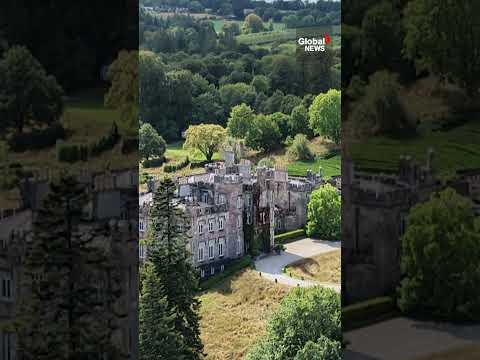
Strancally Castle

Strancally Castle (from Irish Srón Chaillí, meaning 'nose of the hag') is a castellated country house in County Waterford, Ireland. It was built around 1827 near the site of an earlier castle overlooking the River Blackwater, close to the town of Tallow, County Waterford and Youghal, County Cork. Several structures in the demesne are listed on the Record of Protected Structures maintained by Waterford City and County Council.

Popularity
69
Explore place →
Curraghmore House — photo by MainlyTwelve #2

Curraghmore House

Curraghmore near Portlaw, County Waterford, Ireland, is a historic house and estate and the seat of the Marquess of Waterford. The estate was part of the grant of land made to Sir Roger le Puher (la Poer) by Henry II in 1177 after the Anglo-Norman invasion of Ireland. Since then, the De La Poer Beresford family has owned these estates. It is the oldest family home in Ireland.

Popularity
56
Explore place →
Gurteen Castle — photo by Irishtree #3

Gurteen Castle

Gurteen de la Poer, or Gurteen le Poer, is an Elizabethan Revival house in County Waterford, Ireland, situated on the south bank of the River Suir, close to Kilsheelan and about 8 km east of Clonmel. The estate belonged to the de la Poers, an Anglo-Norman family whose affiliation with the Catholic Church led to their eventual expulsion from the Protestant English establishment. Edmund, 1st Count de la Poer, 18th Lord le Poer and Curraghmore, a Knight of Malta and Private Chamberlain to Pope Pius X, commenced the building of the present castle in 1863 to replace an earlier house which itself replaced a yet earlier house. The large baronial house was designed by Samuel Ussher Roberts (1821–1900), great-grandson of the 18th century Waterford architect John Roberts. The design of Castle Gurteen was probably influenced by Scottish architect William Burn, an architect responsible for several Tudor-Baronial mansions in Britain. Construction began 1863 and was completed in 1866. After the completion of Castle Gurteen, Samuel Ussher Roberts also designed Kylemore Castle (now Kylemore Abbey) in County Galway. A number of features used at Gurteen were also used at Kylemore, and the same builder, Thomas Carroll, worked on both castles.

Popularity
51
Explore place →
Kilclooney Mountain — photo by Colin Park #4

Kilclooney Mountain

Fauscoum (Irish: Fáschom), also known as Kilclooney Mountain, is a mountain in County Waterford, Ireland. With a height of 792 m (2,598 ft), it is the highest mountain of the Comeragh Mountain Range and the second highest mountain in County Waterford after Knockmealdown.

Popularity
40
Explore place →
Viking settlement site — photo by David Dixon #5

Viking settlement site

Woodstown (Irish: Baile na Coille, IPA:[ˈbˠalʲəˈnˠaˈkɛl̪ʲə]) is home to a historic settlement measuring 1.5 km by 0.5 km, located on the southern bank of the River Suir, about 5.5 km west of Waterford City in the southeast of Ireland. This site should not be confused with Woodstown beach which is on the western side of Waterford Harbour near the fishing port of Dunmore East.

Popularity
37
Explore place →
Medieval Museum — photo by Vadrefjord #6

Medieval Museum

Waterford Treasures is a group of museums in and related to the city of Waterford in Ireland. It consists of four entities branded as museums (the Medieval Museum, Irish Silver Museum, Irish Museum of Time, Irish Wake Museum) and a historic building, the former Bishop's Palace, all located in adjacent, and another historic building, Reginald's Tower, which contains the Waterford Viking Museum. All these are located in the Viking Triangle. The collections includes the 14th Century Waterford Charter Roll. Associated with Waterford Treasures are a cafe, and the Epic Walking Tour and the King of the Vikings Virtual Reality Adventure.

Popularity
35
Explore place →

Videos from Waterford

Meta CEO Mark Zuckerberg buys 19th-century castle in Ireland

Meta CEO Mark Zuckerberg buys 19th-century castle in Ireland

Global News

Strancally Castle →
Curraghmore house and estate winter 2019

Curraghmore house and estate winter 2019

Pats Irelands Eye

Curraghmore House →

All places in Waterford

Showing 24 of 170 places

CastleStrancally Castle
▶ Video
CastleWaterford

Strancally Castle

Strancally Castle (from Irish Srón Chaillí, meaning 'nose of the hag') is a castellated country house in County Waterford, Ireland. It was built around 1827 near the site of an earlier castle overlooking the River Blackwater, close to the town of Tallow, County Waterford and Youghal, County Cork. Several structures in the demesne are listed on the Record of Protected Structures maintained by Waterford City and County Council.

Curraghmore House — photo by MainlyTwelve▶ Video
CastleWaterford

Curraghmore House

Curraghmore near Portlaw, County Waterford, Ireland, is a historic house and estate and the seat of the Marquess of Waterford. The estate was part of the grant of land made to Sir Roger le Puher (la Poer) by Henry II in 1177 after the Anglo-Norman invasion of Ireland. Since then, the De La Poer Beresford family has owned these estates. It is the oldest family home in Ireland.

Gurteen Castle — photo by Irishtree
CastleWaterford

Gurteen Castle

Gurteen de la Poer, or Gurteen le Poer, is an Elizabethan Revival house in County Waterford, Ireland, situated on the south bank of the River Suir, close to Kilsheelan and about 8 km east of Clonmel. The estate belonged to the de la Poers, an Anglo-Norman family whose affiliation with the Catholic Church led to their eventual expulsion from the Protestant English establishment. Edmund, 1st Count de la Poer, 18th Lord le Poer and Curraghmore, a Knight of Malta and Private Chamberlain to Pope Pius X, commenced the building of the present castle in 1863 to replace an earlier house which itself replaced a yet earlier house. The large baronial house was designed by Samuel Ussher Roberts (1821–1900), great-grandson of the 18th century Waterford architect John Roberts. The design of Castle Gurteen was probably influenced by Scottish architect William Burn, an architect responsible for several Tudor-Baronial mansions in Britain. Construction began 1863 and was completed in 1866. After the completion of Castle Gurteen, Samuel Ussher Roberts also designed Kylemore Castle (now Kylemore Abbey) in County Galway. A number of features used at Gurteen were also used at Kylemore, and the same builder, Thomas Carroll, worked on both castles.

Kilclooney Mountain — photo by Colin Park

Kilclooney Mountain

Fauscoum (Irish: Fáschom), also known as Kilclooney Mountain, is a mountain in County Waterford, Ireland. With a height of 792 m (2,598 ft), it is the highest mountain of the Comeragh Mountain Range and the second highest mountain in County Waterford after Knockmealdown.

Viking settlement site — photo by David Dixon
Archaeological SiteWaterford

Viking settlement site

Woodstown (Irish: Baile na Coille, IPA:[ˈbˠalʲəˈnˠaˈkɛl̪ʲə]) is home to a historic settlement measuring 1.5 km by 0.5 km, located on the southern bank of the River Suir, about 5.5 km west of Waterford City in the southeast of Ireland. This site should not be confused with Woodstown beach which is on the western side of Waterford Harbour near the fishing port of Dunmore East.

Medieval Museum — photo by Vadrefjord
MuseumWaterford

Medieval Museum

Waterford Treasures is a group of museums in and related to the city of Waterford in Ireland. It consists of four entities branded as museums (the Medieval Museum, Irish Silver Museum, Irish Museum of Time, Irish Wake Museum) and a historic building, the former Bishop's Palace, all located in adjacent, and another historic building, Reginald's Tower, which contains the Waterford Viking Museum. All these are located in the Viking Triangle. The collections includes the 14th Century Waterford Charter Roll. Associated with Waterford Treasures are a cafe, and the Epic Walking Tour and the King of the Vikings Virtual Reality Adventure.

Croughaun Hill — photo by Peter Taylor

Croughaun Hill

Croughaun Hill (Irish: Cruachán Paorach or Cruachán) is a hill in north County Waterford, Ireland. It is a largely solitary hill to the east of the Comeragh Mountains.

Knocknafallia — photo by Colin Park

Knocknafallia

Knocknafallia (from Irish Cnoc na Faille, meaning 'hill of the cliff') is a 668 m (2,192 ft) high mountain in County Waterford, Ireland.

Knockanaffrin — photo by Colin Park

Knockanaffrin

Knockanaffrin (from Irish Cnoc an Aifrinn, meaning 'hill of the mass') is a mountain in County Waterford, Ireland. It is part of the Comeragh Mountains.

Knockmealdown — photo by The original uploader was Ww2censor at English Wikipedia.

Knockmealdown

Knockmealdown (Irish: Cnoc Mhaoldomhnaigh, meaning 'hill of Maoldomhnach') is the highest peak of the Knockmealdown Range of mountains, located on the border between counties Tipperary and Waterford.

Lismore Castle — photo by Ingo Mehling
CastleWaterford

Lismore Castle

Lismore Castle (Irish: Caisleán an Leasa Mhóir) is a castle located in the town of Lismore, County Waterford, Ireland. It belonged to the Earls of Desmond, the Earls of Cork, and then to the Cavendish family from 1753. It is currently the Irish home of the Duke of Devonshire. The first castle on the site was built in 1185, and replaced, twice, in the 16th century. It was largely rebuilt in the Gothic style during the mid-nineteenth century for the 6th Duke of Devonshire.

Coumfea — photo by Colin Park

Coumfea

Coumfea (from Irish Coum Fia, meaning 'Coum of Deer' or 'Wild Coum') is a mountain and series of glacial valleys in County Waterford, Ireland. It is part of the Comeragh Mountains. Coumfea and Coumalocha combine to make one bowl shape hollow facing west towards Ballymacarbary and the Nire Valley. Coumtay facing towards the South and East backs onto Coumfea with only a narrow ridge between them.

Fenor Bog — photo by Brendan Tobin
Nature ReserveWaterford

Fenor Bog

Fenor Bog is a regenerated alkaline fen and national nature reserve of approximately 32 acres (0.13 km2) in County Waterford. It is the county's first national nature reserve and the only extant alkaline fen in the southeast of Ireland.

Sugarloaf Hill — photo by Richard Webb

Sugarloaf Hill

Sugarloaf Hill (Irish: Cnoc na Binne) is a mountain peak located in the Knockmealdown Mountains on the border between County Tipperary and County Waterford.

CastleReginald's Tower
CastleWaterford

Reginald's Tower

Reginald's Tower (Irish: Túr Raghnaill) is a historic tower in Waterford, Munster, Ireland. It is located at the eastern end of the city quay. The tower has been in usage for different purposes for many centuries and is an important landmark in Waterford and an important remnant of its medieval urban defence system. It is the oldest civic building in Ireland and it is the only urban monument in Ireland to retain a Norse or Viking name.

Saint Declan's Monastery — photo by CelticMist

Saint Declan's Monastery

St. Declan's Monastery, containing the remains of Ardmore Cathedral, is a former monastery and National Monument located in County Waterford, Ireland.

Knockeen Portal Tomb — photo by RTG
MegalithWaterford

Knockeen Portal Tomb

The Knockeen Portal Tomb is a megalith in Knockeen, County Waterford, Ireland. It is the largest dolmen (portal tomb) in County Waterford exhibiting a double capstone configuration, though it is not the tallest standing stone structure. It is one of the finest examples of a dolmen in Ireland.

Ballysaggartmore Towers — photo by Photo-raven
CastleWaterford

Ballysaggartmore Towers

Ballysaggartmore Towers (Irish: Baile na sagart mór) are two ornate entrance lodges (one also acts as a bridge) that are situated on the former Ballysaggartmore Demesne approx 2.5 kilometres from the town of Lismore in County Waterford, Ireland. The structures are considered architectural "follies".

Gaulstown Portal Tomb — photo by RTG
MegalithWaterford

Gaulstown Portal Tomb

The Gaulstown Portal Tomb or Gaulstown Dolmen is a megalithic portal tomb situated in Gaulstown, Butlerstown in County Waterford, Ireland. It lies about 7 km (4.3 mi) south west of Waterford City.

The Viking Triangle — photo by Nmwalsh
GeneralWaterford

The Viking Triangle

The Waterford Viking Triangle is part of the cultural and heritage area in Waterford City. It is so called because of the 1000-year-old Viking walls which once surrounded it. The sites within the "triangle" include Reginald's Tower (which contains the Viking Museum) as well as the Medieval Museum and the Bishop's Palace Museum, collectively known as Waterford Museum of Treasures.

Double Tower — photo by Nmwalsh
CastleWaterford

Double Tower

The Double Tower is one of the 17 towers which were part of the city walls of Waterford, Munster, Ireland. It was built in the latter part of the 15th century and the early part of the 16th century. Six of the original 17 towers survive to this day; the other five being Reginald's Tower, Beach Tower, Semi-Lunar Tower, French Tower, and Watch Tower (Waterford). The Double Tower is located on Castle Street, between the French Tower and the Watch Tower. All three towers are well-preserved, along with some parts of the old city wall between them.

Dunhill Castle — photo by Philip Halling
CastleWaterford

Dunhill Castle

Dunhill Castle is a historic castle situated in County Waterford. The site features the remains of a medieval fortification.

More counties in Munster